综合知识
1/75
若某条无条件转移汇编指令采用直接寻址,则该指令的功能是将指令中的地址码送入(1)。
综合知识
2/75
若某计算机系统的I/O接口与主存采用统一编址,则输入输出操作是通过(2)指令来完成的。
综合知识
3/75
在程序的执行过程中,Cache与主存的地址映像由(3).
综合知识
4/75
总线复用方式可以(4)。
综合知识
5/75
确定软件的模块划分及模块之间的调用关系是(5)阶段的任务。
综合知识
6/75
利用结构化分析模型进行接口设计时,应以(6)为依据。
综合知识
7/75
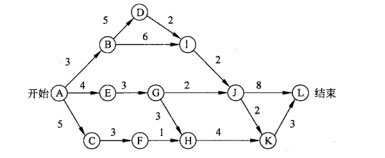
下图是一个软件项目的活动图,其中顶点表示项目里程碑,连接顶点的边表示包含的活动,边上的值表示完成活动所需要的时间,则关键路径长度为(7)。
综合知识
8/75
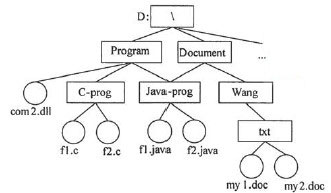
若某文件系统的目录结构如下图所示,假设用户要访问文件f1.java,且当前工作目录为Program,则该文件的全文件名为(8),其相对路径为(9)。
综合知识
9/75
若某文件系统的目录结构如下图所示,假设用户要访问文件f1.java,且当前工作目录为Program,则该文件的全文件名为(8),其相对路径为(9)。
综合知识
10/75
(10)指可以不经著作权人许可,无需支付报酬,使用其作品。
综合知识
11/75
两个自治系统(AS)之间的路由协议是(11)。
综合知识
12/75
一个以太网交换机,读取整个数据帧,对数据帧进行差错校验后再转发出去,这种交换方式称为(12)。
综合知识
13/75
以下关于光纤通信的叙述中,正确的是(13)。
综合知识
14/75
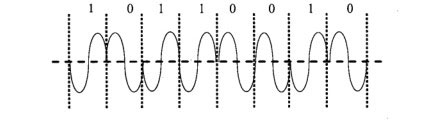
可以用数字信号对模拟载波的不同参量进行调制,下图所示的调制方式称为(14)。
综合知识
15/75
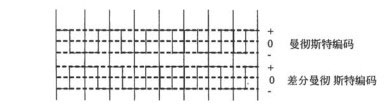
下图中画出了曼彻斯特编码和差分曼彻斯特编码的波形图,实际传送的比特串为(15)。
综合知识
16/75
E1信道的数据速率是(16),其中毎个话音信道的数据速率是(17)。
综合知识
17/75
E1信道的数据速率是(16),其中毎个话音信道的数据速率是(17)。
综合知识
18/75
在各种xDSL技术中,能提供上下行信道非对称传输的是(18),
综合知识
19/75
采用ADSL虚拟拨号接入方式中,用户端需要安装(19)软件。
综合知识
20/75
ICMP协议属于TCP/IP网络中的(20)协议,ICMP报文封装在(21)包中传送。
综合知识
21/75
ICMP协议属于TCP/IP网络中的(20)协议,ICMP报文封装在(21)包中传送。
综合知识
22/75
ARP表用于缓存设备的IP地址与MAC地址的对应关系,采用ARP表的好处是(22)。
综合知识
23/75
以下有关边界网关协议BGP4的叙述中,不正确的是(23).
综合知识
24/75
为了限制路由信息传播的范围,OSPF协议把网络划分成4种区域(Area),其中(24) 的作用是连接各个区域的传输网络,(25)不接受本地自治系统之外的路由信息。
综合知识
25/75
为了限制路由信息传播的范围,OSPF协议把网络划分成4种区域(Area),其中(24) 的作用是连接各个区域的传输网络,(25)不接受本地自治系统之外的路由信息。
综合知识
26/75
POP3协议采用(26)模式,当客户机需要服务时,客户端软件(OutlookExpress 或FoxMail)与POP3服务器建立(27)连接。
综合知识
27/75
POP3协议采用(26)模式,当客户机需要服务时,客户端软件(OutlookExpress 或FoxMail)与POP3服务器建立(27)连接。
综合知识
28/75
SMTP服务器端使用的端口号默认为(28)。
综合知识
29/75
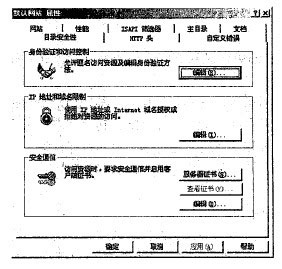
下图为Web站点的默认网站属性窗口,如果要设置用户对主页文件的读取权限,需要在(29)选项卡中进行配置。
综合知识
30/75
DHCP客户端启动时会向网络发出一个Dhcpdiscover包来请求IP地址,其源IP地址为(30)。
综合知识
31/75
当使用时间到达租约期的(31)时,DHCP客户端和DHCP服务器将更新租约。
综合知识
32/75
在Linux中,某文件的访问权限信息为《-rwxr--r--》,以下对该文件的说明中,正确的是(32)。
综合知识
33/75
在Linux中,更改用户口令的命令是(33)。
综合知识
34/75
在Linux中,目录《/proc》主要用于存放(34)。
综合知识
35/75
网络用户只能接收但不能发送Email,不可能的原因是(35)。
综合知识
36/75
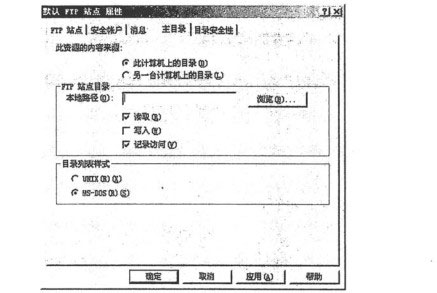
配置FTP服务器的属性窗口如下图所示,默认情况下《本地路径》文本框中的值为(36).
综合知识
37/75
在Windows系统中,进行域名解析时,客户端系统会首先从本机的(37)文件中寻找域名对应的IP地址。在该文件中,默认情况下必须存在的一条记录是(38).
综合知识
38/75
在Windows系统中,进行域名解析时,客户端系统会首先从本机的(37)文件中寻找域名对应的IP地址。在该文件中,默认情况下必须存在的一条记录是(38).
综合知识
39/75
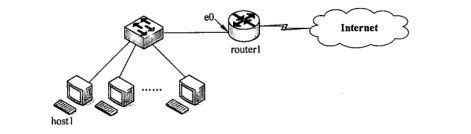
某网络拓扑结构如下图所示:

在主机hostl的命令行窗口输入tracertwww.abc.com.cn命令后,得到如下结果:
C:\Documents and Settings\User>tracert www.abc.com.cn
Tracing route to caelum .abc.com.cn [208.30.1.101]
over a maximum of 30 hops:
1 1ms 1ms <1ms 119.215.67.254
2 2ms 1ms 1ms 172.116. 11.2
3 71ms 1ms 1ms 119.145. 65.86
4 1ms 1ms 1ms 172.116.141.6
5 1ms 1ms 1ms 192.168.66.14
6 1ms 1ms <1ms 208.30.1.101
Trace complete
则路由器routerl e0接口的IP地址为(39);www.abc.com.cn的IP地址为(40)。
综合知识
40/75
某网络拓扑结构如下图所示:

在主机hostl的命令行窗口输入tracertwww.abc.com.cn命令后,得到如下结果:
C:\Documents and Settings\User>tracert www.abc.com.cn
Tracing route to caelum .abc.com.cn [208.30.1.101]
over a maximum of 30 hops:
1 1ms 1ms <1ms 119.215.67.254
2 2ms 1ms 1ms 172.116. 11.2
3 71ms 1ms 1ms 119.145. 65.86
4 1ms 1ms 1ms 172.116.141.6
5 1ms 1ms 1ms 192.168.66.14
6 1ms 1ms <1ms 208.30.1.101
Trace complete
则路由器routerl e0接口的IP地址为(39);www.abc.com.cn的IP地址为(40)。
综合知识
41/75
某报文的长度是1000字节,利用MD5计算出来的报文摘要长度是(41)位,利用SHA计算出来的报文摘要长度是(42)位。
综合知识
42/75
某报文的长度是1000字节,利用MD5计算出来的报文摘要长度是(41)位,利用SHA计算出来的报文摘要长度是(42)位。
综合知识
43/75
以下安全协议中,用来实现安全电子邮件的协议是(43)。
综合知识
44/75
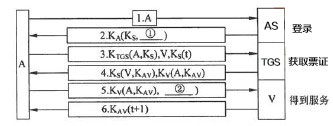
Kerberos由认证服务器(AS)和票证授予服务器(TGS)两部分组成,当用户A通过Kerberos向服务器V请求服务时,认证过程如下图所示,图中①处为(44),②处为(45)。
综合知识
45/75
Kerberos由认证服务器(AS)和票证授予服务器(TGS)两部分组成,当用户A通过Kerberos向服务器V请求服务时,认证过程如下图所示,图中①处为(44),②处为(45)。
综合知识
46/75
公钥体系中,用户甲发送给用户乙的数据要用(46)进行加密。
综合知识
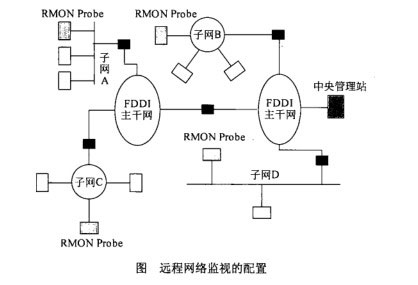
47/75

RMON和SNMP的主要区别是(47)。

综合知识
48/75
SNMP采用UDP提供的数据报服务传递信息,这是由于(48)。
综合知识
49/75
在网络管理中要防止各种安全威胁。在SNMP中,无法预防的安全威胁是(49)。
综合知识
50/75
在Windows的DOS窗口中键入命令
C:\> nslookup
> set type=ptr
>211.151.91.165
这个命令序列的作用是(50)。
综合知识
51/75
32位的IP地址可以划分为网络号和主机号两部分。下面的地址中(51)不能作为目标地址,(52)不能作为源地址。
综合知识
52/75
32位的IP地址可以划分为网络号和主机号两部分。下面的地址中(51)不能作为目标地址,(52)不能作为源地址。
综合知识
53/75
假设用户Q1有2000台主机,则必须给他分配(53)个C类网络,如果分配给用户Q1的超网号为200.9.64.0,则指定给Q1的地址掩码为(54):假设给另一用户Q2分配的C类网络号为200.9.16.0〜200.9.31.0,如果路由器收到一个目标地址为11001000 00001001 01000011 00100001的数据报,则该数据报应送给用户(55)。
综合知识
54/75
假设用户Q1有2000台主机,则必须给他分配(53)个C类网络,如果分配给用户Q1的超网号为200.9.64.0,则指定给Q1的地址掩码为(54):假设给另一用户Q2分配的C类网络号为200.9.16.0〜200.9.31.0,如果路由器收到一个目标地址为11001000 00001001 01000011 00100001的数据报,则该数据报应送给用户(55)。
综合知识
55/75
假设用户Q1有2000台主机,则必须给他分配(53)个C类网络,如果分配给用户Q1的超网号为200.9.64.0,则指定给Q1的地址掩码为(54):假设给另一用户Q2分配的C类网络号为200.9.16.0〜200.9.31.0,如果路由器收到一个目标地址为11001000 00001001 01000011 00100001的数据报,则该数据报应送给用户(55)。
综合知识
56/75
建筑物综合布线系统中工作区子系统是指(56)。
综合知识
57/75
设有下面4条路由:196.34.129.0/24、196.34.130.0/24、196.34.132.0/24 和196.34.133.0/24,如果进行路由汇聚,能覆盖这4条路由的地址是(57)。
综合知识
58/75
IPv6 地址33AB:0000:0000:CD30:0000:0000:0000:0000/60 可以表示成各种简写形式,以下写法中,正确的是(58).
综合知识
59/75
配置路由器时,PC的串行口与路由器的(59) 口相连,路由器与PC串行口通信的默认数据速率为(60)。
综合知识
60/75
配置路由器时,PC的串行口与路由器的(59) 口相连,路由器与PC串行口通信的默认数据速率为(60)。
综合知识
61/75
交换机命令 SwitchA(VLAN) #vtp pruning 的作用是(61) 。
综合知识
62/75
以太网介质访问控制策略可以采用不同的监听算法,其中一种是:《一旦介质空闲就发送数据,假如介质忙,继续监听,直到介质空闲后立即发送数据》,这种算法称为(62)监听算法。这种算法的主要特点是(63)。
综合知识
63/75
以太网介质访问控制策略可以采用不同的监听算法,其中一种是:《一旦介质空闲就发送数据,假如介质忙,继续监听,直到介质空闲后立即发送数据》,这种算法称为(62)监听算法。这种算法的主要特点是(63)。
综合知识
64/75
采用CSMA/CD协议的基带总线,其段长为1000m,中间没有中继器,数据速率为10Mb/s,信号传播速度为200m/μs,为了保证在发送期间能够检测到冲突,则该网络上的最小帧长应为(64)比特。
综合知识
65/75
以下属于万兆以太网物理层标准的是(65)。
综合知识
66/75
IEEE802.11 采用了类似于802.3 CSMA/CD协议的CSMA/CA协议,之所以不采用CSMA/CD协议的原因是(66)。
综合知识
67/75
无线局域网(WLAN)标准IEEE802.11g规定的最大数据速率是(67)。
综合知识
68/75
大型局域网通常组织成分层结构(核心层、汇聚层和接入层),以下关于网络核心层的叙述中,正确的是(68)
综合知识
69/75
网络设计过程包括逻辑网络设计和物理网络设计两个阶段,各个阶段都要产生相应的文档,以下选项中,(69)应该属于逻辑网络设计文档,(70)属于物理网络设计文档。
综合知识
70/75
网络设计过程包括逻辑网络设计和物理网络设计两个阶段,各个阶段都要产生相应的文档,以下选项中,(69)应该属于逻辑网络设计文档,(70)属于物理网络设计文档。
综合知识
71/75
A transport layer protocol usually has several responsibilities. One is to create a process-to-process communication; UDP uses (71) numbers to accomplish this. Another responsibility is to provide control mechanisms at the transport level. UDP does this task at a very minimal level. There is no flow control mechanism and there is no (72) for received packet. UDP, however, does provide error control to some extent. If UDP detects an error in the received packet, it silently drop it.
The transport layer also provides a connection mechanism for the processes. The (73) must be able to send streams of data to the transport layer. It is the responsibility of the transport layer at (74) station to make the connection with the receiver, chop the stream into transportable units, number them, and send them one by one. It is the responsibility of the transport layer at the receiving end to wait until all the different units belonging to the same process have arrived, check and pass those that are (75) free, and deliver them to the receiving process as a stream.
综合知识
72/75
A transport layer protocol usually has several responsibilities. One is to create a process-to-process communication; UDP uses (71) numbers to accomplish this. Another responsibility is to provide control mechanisms at the transport level. UDP does this task at a very minimal level. There is no flow control mechanism and there is no (72) for received packet. UDP, however, does provide error control to some extent. If UDP detects an error in the received packet, it silently drop it.
The transport layer also provides a connection mechanism for the processes. The (73) must be able to send streams of data to the transport layer. It is the responsibility of the transport layer at (74) station to make the connection with the receiver, chop the stream into transportable units, number them, and send them one by one. It is the responsibility of the transport layer at the receiving end to wait until all the different units belonging to the same process have arrived, check and pass those that are (75) free, and deliver them to the receiving process as a stream.
综合知识
73/75
A transport layer protocol usually has several responsibilities. One is to create a process-to-process communication; UDP uses (71) numbers to accomplish this. Another responsibility is to provide control mechanisms at the transport level. UDP does this task at a very minimal level. There is no flow control mechanism and there is no (72) for received packet. UDP, however, does provide error control to some extent. If UDP detects an error in the received packet, it silently drop it.
The transport layer also provides a connection mechanism for the processes. The (73) must be able to send streams of data to the transport layer. It is the responsibility of the transport layer at (74) station to make the connection with the receiver, chop the stream into transportable units, number them, and send them one by one. It is the responsibility of the transport layer at the receiving end to wait until all the different units belonging to the same process have arrived, check and pass those that are (75) free, and deliver them to the receiving process as a stream.
综合知识
74/75
A transport layer protocol usually has several responsibilities. One is to create a process-to-process communication; UDP uses (71) numbers to accomplish this. Another responsibility is to provide control mechanisms at the transport level. UDP does this task at a very minimal level. There is no flow control mechanism and there is no (72) for received packet. UDP, however, does provide error control to some extent. If UDP detects an error in the received packet, it silently drop it.
The transport layer also provides a connection mechanism for the processes. The (73) must be able to send streams of data to the transport layer. It is the responsibility of the transport layer at (74) station to make the connection with the receiver, chop the stream into transportable units, number them, and send them one by one. It is the responsibility of the transport layer at the receiving end to wait until all the different units belonging to the same process have arrived, check and pass those that are (75) free, and deliver them to the receiving process as a stream.
综合知识
75/75
A transport layer protocol usually has several responsibilities. One is to create a process-to-process communication; UDP uses (71) numbers to accomplish this. Another responsibility is to provide control mechanisms at the transport level. UDP does this task at a very minimal level. There is no flow control mechanism and there is no (72) for received packet. UDP, however, does provide error control to some extent. If UDP detects an error in the received packet, it silently drop it.
The transport layer also provides a connection mechanism for the processes. The (73) must be able to send streams of data to the transport layer. It is the responsibility of the transport layer at (74) station to make the connection with the receiver, chop the stream into transportable units, number them, and send them one by one. It is the responsibility of the transport layer at the receiving end to wait until all the different units belonging to the same process have arrived, check and pass those that are (75) free, and deliver them to the receiving process as a stream.