综合知识
1/75
UML用系统视图描述系统的组织结构。其中,(1)对系统的物理代码的文件和构件进行建模。
综合知识
2/75
UML中的事物也称为建模元素,(2)在模型中属于静态的部分,代表概念上或物理上的元素。这些元素中,(3)定义了交互的操作。
综合知识
3/75
UML中的事物也称为建模元素,(2)在模型中属于静态的部分,代表概念上或物理上的元素。这些元素中,(3)定义了交互的操作。
综合知识
4/75
在面向对象系统中,有两个类存在整体与部分的关系,如果部分可能同时属于多个整体,则两者之间的关系称为(4);如果部分和整体具有统一的生命周期,则两者之间的关系称为(5)。
综合知识
5/75
在面向对象系统中,有两个类存在整体与部分的关系,如果部分可能同时属于多个整体,则两者之间的关系称为(4);如果部分和整体具有统一的生命周期,则两者之间的关系称为(5)。
综合知识
6/75
以下关于利用三重DES进行加密的说法,(6)是正确的。
综合知识
7/75
利用报文摘要算法生成报文摘要的目的是(7)。
综合知识
8/75
支持电子邮件加密服务的标准或技术是(8)。
综合知识
9/75
下图为DARPA提出的公共入侵检测框架示意图,该系统由4个模块组成。其中模块①〜④分别是(9)。
.jpg)
综合知识
10/75
王教授2002年3月1日自行将我国《计算机软件保护条例》译成法文,投递给某杂志社,于2002年6月1日发表。国家有关行政部门认为王教授的译文质量很高,经与王教授协商,于2003年2月10日发文将该译文定为官方正式译文。王教授对其译文享有著作权的期限为(10)。
综合知识
11/75
王某是一名软件设计师,随着软件开发过程的完成,编写了多份软件文档,并上交公司存档。其软件文档属于职务作品,(11)。
综合知识
12/75
商标权权利人是指(12)。
综合知识
13/75
软件著作权的保护对象不包括(13)。
综合知识
14/75
某计算机系统采用4级流水线结构执行指令,设每条指令的执行由取指令 分析指令
分析指令 、取操作数
、取操作数 、运算并保存结果
 组成(注:括号中是指令执行周期),并分别用4个子部件完成,该流水线的最大吞吐率为(14);若连续向流水线输入5条指令,则该流水线的加速比为(15)。
分析指令、取操作数、运算并保存结果组成(注:括号中是指令执行周期),并分别用4个子部件完成,该流水线的最大吞吐率为(14);若连续向流水线输入5条指令,则该流水线的加速比为(15)。综合知识
15/75
某计算机系统采用4级流水线结构执行指令,设每条指令的执行由取指令分析指令、取操作数、运算并保存结果组成(注:括号中是指令执行周期),并分别用4个子部件完成,该流水线的最大吞吐率为(14);若连续向流水线输入5条指令,则该流水线的加速比为(15)。
分析指令、取操作数、运算并保存结果组成(注:括号中是指令执行周期),并分别用4个子部件完成,该流水线的最大吞吐率为(14);若连续向流水线输入5条指令,则该流水线的加速比为(15)。综合知识
16/75
CPU访问存储器时,被访问数据倾向于聚集在一个较小的连续区域中,若一个存储单元已被访问,则其邻近的存储单元有可能还要被访问,该特性被称为(16)。
综合知识
17/75
计算机系统中主机与外设间的输入输出控制方式有多种,其中占用主机CPU时间最多的是(17)方式。
综合知识
18/75
RISC (精简指令系统计算机)的技术思想是当代计算机设计的基础技术之一,(18) 不是RISC的特点。
综合知识
19/75
企业应用集成是当前很多企业都需要面对的一个复杂问题,集成过程中通常需要根据企业的实际情况选择合适的集成方案。某企业要求采用较低的成本,暴露现有应用系统的功能,集成内部的多个应用系统,并对外提供复杂多变的业务逻辑,针对上述要求,(19)是较为合适的集成方式。
综合知识
20/75
产品数据管理(PDM)主要管理所有与产品相关的信息与过程,(20)不属于产品数据管理的核心功能。
综合知识
21/75
企业门户是企业优化业务模式的重要手段,按照实际应用领域特点,企业门户可以划分为多种类型,其中(21)注重信息的单向传递,面向特定的使用人群,缺乏用户与企业之间的互动;(22)以业务流程为核心,将业务流程中的功能模块通过门户技术集成在一起。
综合知识
22/75
企业门户是企业优化业务模式的重要手段,按照实际应用领域特点,企业门户可以划分为多种类型,其中(21)注重信息的单向传递,面向特定的使用人群,缺乏用户与企业之间的互动;(22)以业务流程为核心,将业务流程中的功能模块通过门户技术集成在一起。
综合知识
23/75
商业智能系统主要包括数据预处理、建立数据仓库、数据分析和数据展现4个主要阶段,其中(23)是处理海量数据的基础:数据分析是体现系统智能的关键,一般采用(24)和数据挖掘技术。
综合知识
24/75
商业智能系统主要包括数据预处理、建立数据仓库、数据分析和数据展现4个主要阶段,其中(23)是处理海量数据的基础:数据分析是体现系统智能的关键,一般采用(24)和数据挖掘技术。
综合知识
25/75
系统规划是信息系统生命周期的第一个阶段。以下(25)活动,属于系统规划阶段的主要工作。系统规划最终完成后,通常会形成(26),作为系统建设的正式依据。
综合知识
26/75
系统规划是信息系统生命周期的第一个阶段。以下(25)活动,属于系统规划阶段的主要工作。系统规划最终完成后,通常会形成(26),作为系统建设的正式依据。
综合知识
27/75
以下关于系统调查时所画的系统组织结构图的叙述,错误的是(27)。
综合知识
28/75
企业业务流程包含3个要素,分别是实体、对象和(28) 。企业业务流程建模是业务流程分析的重要步骤,某公司开发的信息系统具有并行、异步、分布式和随机性等特征,在这种情况下,(29)建模方法比较合适。
综合知识
29/75
企业业务流程包含3个要素,分别是实体、对象和(28) 。企业业务流程建模是业务流程分析的重要步骤,某公司开发的信息系统具有并行、异步、分布式和随机性等特征,在这种情况下,(29)建模方法比较合适。
综合知识
30/75
详细调查的目标是获取企业业务处理的方法,深入了解系统的处理流程,确定用户需求。详细调查强调科学合理,根据欲获取信息的不同,调查方法也各不相同。若想获取用户对系统的想法和建议等定性特征,则(30)方法比较合适:若想获取系统某些较为复杂的流程和操作过程,则(31)方法比较合适。
综合知识
31/75
详细调查的目标是获取企业业务处理的方法,深入了解系统的处理流程,确定用户需求。详细调查强调科学合理,根据欲获取信息的不同,调查方法也各不相同。若想获取用户对系统的想法和建议等定性特征,则(30)方法比较合适:若想获取系统某些较为复杂的流程和操作过程,则(31)方法比较合适。
综合知识
32/75
以下关于需求获取方法的叙述中,(32)是正确的。
综合知识
33/75
数据动态分析中,(33)属于数据随机变动属性,(34)属于数据固定个体变动属性。
综合知识
34/75
数据动态分析中,(33)属于数据随机变动属性,(34)属于数据固定个体变动属性。
综合知识
35/75
RUP中的软件过程在时间上被分解为4个顺序的阶段:初始阶段、细化阶段、构建阶段和移交阶段。架构的确定与建立是在(35)完成的。
综合知识
36/75
用于增加对象功能的设计模式是(36);用于限制对象访问的设计模式是(37) .
综合知识
37/75
用于增加对象功能的设计模式是(36);用于限制对象访问的设计模式是(37) .
综合知识
38/75
下列关于敏捷方法的叙述,(38)是错误的。
综合知识
39/75
以下关于依赖倒置原则的叙述中,正确的是(39)。
综合知识
40/75
在数据库系统中,为了保证数据库的(40),通常由DBA使用DBMS提供的授权功能为不同用户授权。
综合知识
41/75
在数据库设计的需求分析、概念结构设计、逻辑结构设计和物理结构设计的四个阶段中,基本E-R图是(41):数据库逻辑结构设计阶段的主要工作步骤依次为(42)。
综合知识
42/75
在数据库设计的需求分析、概念结构设计、逻辑结构设计和物理结构设计的四个阶段中,基本E-R图是(41):数据库逻辑结构设计阶段的主要工作步骤依次为(42)。
综合知识
43/75
给定关系模式科室K (科室号,科室名,负责人,科室电话)、医生Y (医生号,医生名,性别,科室号,联系电话,家庭地址)和患者B (病历号,患者名,性别,医保号,联系方式),并且1个科室有多名医生,1名医生属于1个科室;1名医生可以为多个患者诊疗,1个患者也可以找多名医生诊疗。
科室与医生之间的《所属》联系类型、医生与患者之间的《诊疗》联系类型分别为 (43);其中(44)。下列查询《肝胆科》医生的医生名、联系电话及家庭住址的关系代数表达式中,查询效率最高的是(45) 。
科室与医生之间的《所属》联系类型、医生与患者之间的《诊疗》联系类型分别为 (43);其中(44)。下列查询《肝胆科》医生的医生名、联系电话及家庭住址的关系代数表达式中,查询效率最高的是(45) 。
综合知识
44/75
给定关系模式科室K (科室号,科室名,负责人,科室电话)、医生Y (医生号,医生名,性别,科室号,联系电话,家庭地址)和患者B (病历号,患者名,性别,医保号,联系方式),并且1个科室有多名医生,1名医生属于1个科室;1名医生可以为多个患者诊疗,1个患者也可以找多名医生诊疗。
科室与医生之间的《所属》联系类型、医生与患者之间的《诊疗》联系类型分别为 (43);其中(44)。下列查询《肝胆科》医生的医生名、联系电话及家庭住址的关系代数表达式中,查询效率最高的是(45) 。
科室与医生之间的《所属》联系类型、医生与患者之间的《诊疗》联系类型分别为 (43);其中(44)。下列查询《肝胆科》医生的医生名、联系电话及家庭住址的关系代数表达式中,查询效率最高的是(45) 。
综合知识
45/75
给定关系模式科室K (科室号,科室名,负责人,科室电话)、医生Y (医生号,医生名,性别,科室号,联系电话,家庭地址)和患者B (病历号,患者名,性别,医保号,联系方式),并且1个科室有多名医生,1名医生属于1个科室;1名医生可以为多个患者诊疗,1个患者也可以找多名医生诊疗。
科室与医生之间的《所属》联系类型、医生与患者之间的《诊疗》联系类型分别为 (43);其中(44)。下列查询《肝胆科》医生的医生名、联系电话及家庭住址的关系代数表达式中,查询效率最高的是(45) 。
科室与医生之间的《所属》联系类型、医生与患者之间的《诊疗》联系类型分别为 (43);其中(44)。下列查询《肝胆科》医生的医生名、联系电话及家庭住址的关系代数表达式中,查询效率最高的是(45) 。
综合知识
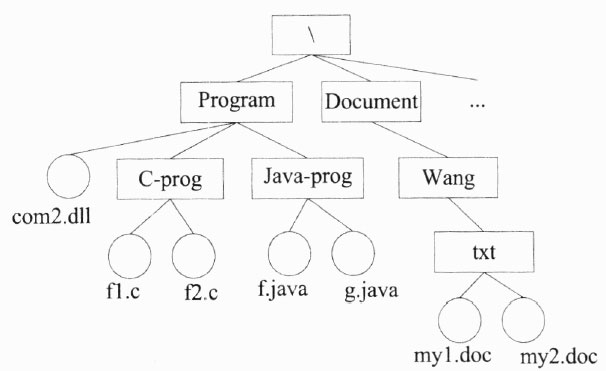
46/75
若某文件系统的目录结构如下图所示,假设用户要访问文件f.java,且当前工作目录为Program,则该文件的全文件名为(46),绝对路径和相对路径分别为(47)。
综合知识
47/75
若某文件系统的目录结构如下图所示,假设用户要访问文件f.java,且当前工作目录为Program,则该文件的全文件名为(46),绝对路径和相对路径分别为(47)。
综合知识
48/75
进程Pl、P2、P3、P4、P5的前趋关系图如下所示:
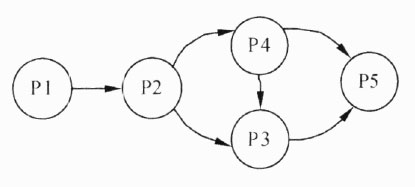
若用PV操作控制这5个进程的同步与互斥,程序如下:
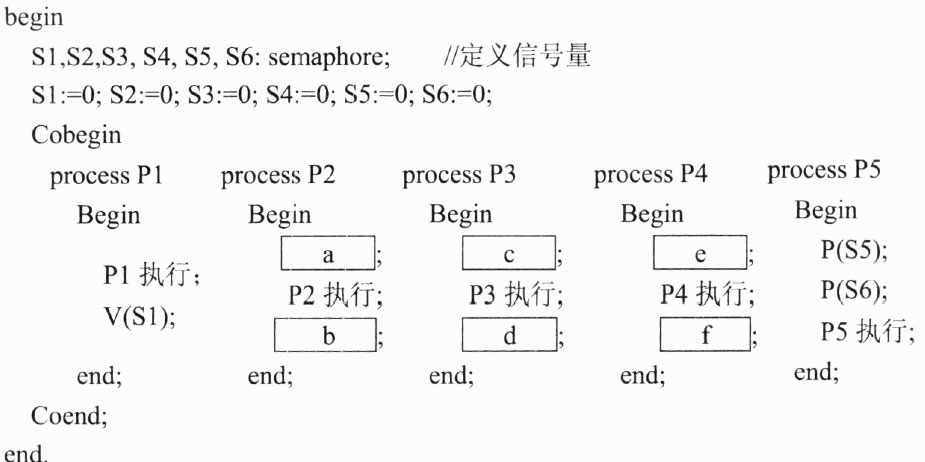
程序中空a和空b处应分别为(48);空c和空d处应分别为(49);空e和空f处应分别为(50) 。
若用PV操作控制这5个进程的同步与互斥,程序如下:
程序中空a和空b处应分别为(48);空c和空d处应分别为(49);空e和空f处应分别为(50) 。
综合知识
49/75
进程Pl、P2、P3、P4、P5的前趋关系图如下所示:
若用PV操作控制这5个进程的同步与互斥,程序如下:
程序中空a和空b处应分别为(48);空c和空d处应分别为(49);空e和空f处应分别为(50) 。
若用PV操作控制这5个进程的同步与互斥,程序如下:
程序中空a和空b处应分别为(48);空c和空d处应分别为(49);空e和空f处应分别为(50) 。
综合知识
50/75
进程Pl、P2、P3、P4、P5的前趋关系图如下所示:
若用PV操作控制这5个进程的同步与互斥,程序如下:
程序中空a和空b处应分别为(48);空c和空d处应分别为(49);空e和空f处应分别为(50) 。
若用PV操作控制这5个进程的同步与互斥,程序如下:
程序中空a和空b处应分别为(48);空c和空d处应分别为(49);空e和空f处应分别为(50) 。
综合知识
51/75
假设磁盘块与缓冲区大小相同,每个盘块读入缓冲区的时间为100 ,缓冲区送入用户区的时间是60
.jpg) ,系统对每个磁盘块数据的处理时间为50
,系统对每个磁盘块数据的处理时间为50.jpg) 。若用户需要将大小为10个磁盘块的Filel文件逐块从磁盘读入缓冲区,并送用户区进行处理,那么采用单缓冲需要花费的时间为(51)
。若用户需要将大小为10个磁盘块的Filel文件逐块从磁盘读入缓冲区,并送用户区进行处理,那么采用单缓冲需要花费的时间为(51) .jpg) ;采用双缓冲需要花费的时间为(52)
;采用双缓冲需要花费的时间为(52).jpg) 。
。
,缓冲区送入用户区的时间是60,系统对每个磁盘块数据的处理时间为50。若用户需要将大小为10个磁盘块的Filel文件逐块从磁盘读入缓冲区,并送用户区进行处理,那么采用单缓冲需要花费的时间为(51) ;采用双缓冲需要花费的时间为(52)。综合知识
52/75
假设磁盘块与缓冲区大小相同,每个盘块读入缓冲区的时间为100,缓冲区送入用户区的时间是60,系统对每个磁盘块数据的处理时间为50。若用户需要将大小为10个磁盘块的Filel文件逐块从磁盘读入缓冲区,并送用户区进行处理,那么采用单缓冲需要花费的时间为(51) ;采用双缓冲需要花费的时间为(52)。
,缓冲区送入用户区的时间是60,系统对每个磁盘块数据的处理时间为50。若用户需要将大小为10个磁盘块的Filel文件逐块从磁盘读入缓冲区,并送用户区进行处理,那么采用单缓冲需要花费的时间为(51) ;采用双缓冲需要花费的时间为(52)。综合知识
53/75
设某信息系统明年初建成后预计在第i (i=l、2、...n)年将能获得经济效益Ci元,则该系统总的经济效益可以估计为(53)元,其中r是贴现率(利率)。
综合知识
54/75
根据近几个月的数据统计,某车次火车到站晚点时间t (分钟)的概率分布密度函数可用函数 )来描述,因此可以计算出其中的待定系数k= (54), 晚点超过5分钟的概率为(55)。
)来描述,因此可以计算出其中的待定系数k= (54), 晚点超过5分钟的概率为(55)。综合知识
55/75
根据近几个月的数据统计,某车次火车到站晚点时间t (分钟)的概率分布密度函数可用函数)来描述,因此可以计算出其中的待定系数k= (54), 晚点超过5分钟的概率为(55)。
)来描述,因此可以计算出其中的待定系数k= (54), 晚点超过5分钟的概率为(55)。综合知识
56/75
某乡规划了村村通公路网建设方案连接其所属6个村,每两个村之间至多只有一条公路相连,各条公路互不重叠。因此,各村所连接的公路条数形成一个6数序列。以下4个序列中,除(56)外都是不可能的。
综合知识
57/75
某书店准备向出版社订购一批本地旅游新版书,书的定价为每本30元,订购价为每本15元。如果该书在年底前尚未售出,则不得不以每本5元的价格退回给出版社。根据以往经验,按定价售出150本、160本、170本、180本的概率分别为0.1、0.2、0.4、0.3。为获取最大期望利润,该书店应订购此书(57)本。
综合知识
58/75
已知有6个村A〜F,相互间的道路距离(单位:里)如下图所示。计划在其中某村建一所学校。据统计,各村希望来上学的学生人数分别为50、40、60、20、70、90。为使全体学生上学所走的总距离最短,学校应建在(58)村。
.jpg)
综合知识
59/75
两学生分别在笔直的高速公路A、B两处对车流进行记录。设A和B相距d米,车1和车2先后匀速行驶依次经过了A、B处,车1经过A、B处的时间分别为T1A和T1B车2经过A、B处的时间分别为T2A和T2B,则当车2经过B处时,与车1的距离为(59)米。
综合知识
60/75
某台计算机的CPU主频为1.8GHz,如果2个时钟周期组成1个机器周期,平均3个机器周期可完成1条指令,则该计算机的指令平均执行速度为(60) MIPS。
综合知识
61/75
以下关于系统性能评估方法的描述,错误的是(61)。
综合知识
62/75
以下编码方法中,(62)不属于熵编码。
综合知识
63/75
MPEG-7是ISO制定的(63)标准。
综合知识
64/75
主机hostl对host2进行域名查询的过程如下图所示,下列说法中正确的是(64)。
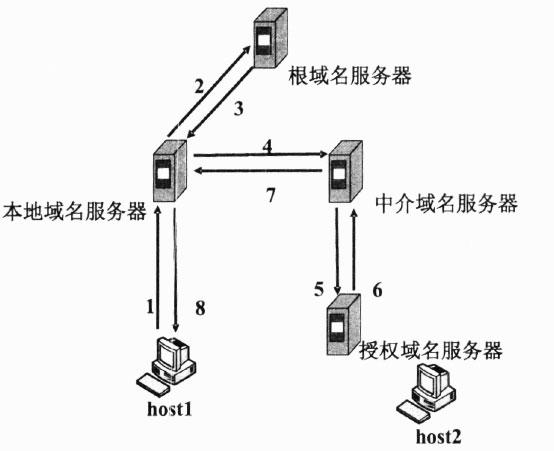
综合知识
65/75
一家连锁店需要设计一种编址方案来支持全国各个店面销售网络,店面有300家左右,每个店面一个子网,每个子网中的终端最多50台,该连锁店从ISP处得到一个B 类地址,应该采用的子网掩码是(65)。
综合知识
66/75
网络系统设计过程中,物理网络设计阶段的任务是(66)。
综合知识
67/75
网络拓扑设计是计算机网络建设的第一步。它对网络的影响主要表现在(67)。①网络性能②系统可靠性③出口带宽④网络协议
综合知识
68/75
在异步通信中,每个字符包含1位起始位、7位数据位、1位奇偶位和2位终止位,每秒钟传送100个字符,则有效数据速率为(68)。
综合知识
69/75
关于网桥和交换机,下面的描述中正确的是(69)。
综合知识
70/75
下列关于DHCP的说法中,错误的是(70)。
综合知识
71/75
Feasibility should be measured throughout the life cycle of system development. The scope and complexity of an apparently feasible project can change after the initial problems and opportunities are fully analyzed or after the system has been designed. Thus, a project that is feasible at one point may become infeasible later. The first feasibility analysis is conducted during the (71) . The (72) represents a major feasibility analysis activity since it charts one of many possible implementations as the target for systems design. (73) is a measure of how well the solution will work in the organization. It is also a measure of how people feel about the system. When it is determined in the later stages of the system life cycle, (74) is often performed with a working prototype of the proposed system. This is a test of the system’s user interfaces and is measured in how easy they are to learn and to use and how they support the desired productivity levels of the users. Economic feasibility has been defined as a cost-benefit analysis. The (75) technique is a simple and popular method for determining if and when an investment will pay for itself.
综合知识
72/75
Feasibility should be measured throughout the life cycle of system development. The scope and complexity of an apparently feasible project can change after the initial problems and opportunities are fully analyzed or after the system has been designed. Thus, a project that is feasible at one point may become infeasible later. The first feasibility analysis is conducted during the (71) . The (72) represents a major feasibility analysis activity since it charts one of many possible implementations as the target for systems design. (73) is a measure of how well the solution will work in the organization. It is also a measure of how people feel about the system. When it is determined in the later stages of the system life cycle, (74) is often performed with a working prototype of the proposed system. This is a test of the system’s user interfaces and is measured in how easy they are to learn and to use and how they support the desired productivity levels of the users. Economic feasibility has been defined as a cost-benefit analysis. The (75) technique is a simple and popular method for determining if and when an investment will pay for itself.
综合知识
73/75
Feasibility should be measured throughout the life cycle of system development. The scope and complexity of an apparently feasible project can change after the initial problems and opportunities are fully analyzed or after the system has been designed. Thus, a project that is feasible at one point may become infeasible later. The first feasibility analysis is conducted during the (71) . The (72) represents a major feasibility analysis activity since it charts one of many possible implementations as the target for systems design. (73) is a measure of how well the solution will work in the organization. It is also a measure of how people feel about the system. When it is determined in the later stages of the system life cycle, (74) is often performed with a working prototype of the proposed system. This is a test of the system’s user interfaces and is measured in how easy they are to learn and to use and how they support the desired productivity levels of the users. Economic feasibility has been defined as a cost-benefit analysis. The (75) technique is a simple and popular method for determining if and when an investment will pay for itself.
综合知识
74/75
Feasibility should be measured throughout the life cycle of system development. The scope and complexity of an apparently feasible project can change after the initial problems and opportunities are fully analyzed or after the system has been designed. Thus, a project that is feasible at one point may become infeasible later. The first feasibility analysis is conducted during the (71) . The (72) represents a major feasibility analysis activity since it charts one of many possible implementations as the target for systems design. (73) is a measure of how well the solution will work in the organization. It is also a measure of how people feel about the system. When it is determined in the later stages of the system life cycle, (74) is often performed with a working prototype of the proposed system. This is a test of the system’s user interfaces and is measured in how easy they are to learn and to use and how they support the desired productivity levels of the users. Economic feasibility has been defined as a cost-benefit analysis. The (75) technique is a simple and popular method for determining if and when an investment will pay for itself.
综合知识
75/75
Feasibility should be measured throughout the life cycle of system development. The scope and complexity of an apparently feasible project can change after the initial problems and opportunities are fully analyzed or after the system has been designed. Thus, a project that is feasible at one point may become infeasible later. The first feasibility analysis is conducted during the (71) . The (72) represents a major feasibility analysis activity since it charts one of many possible implementations as the target for systems design. (73) is a measure of how well the solution will work in the organization. It is also a measure of how people feel about the system. When it is determined in the later stages of the system life cycle, (74) is often performed with a working prototype of the proposed system. This is a test of the system’s user interfaces and is measured in how easy they are to learn and to use and how they support the desired productivity levels of the users. Economic feasibility has been defined as a cost-benefit analysis. The (75) technique is a simple and popular method for determining if and when an investment will pay for itself.