综合知识
1/75
在程序执行过程中,Cache与主存的地址映像由(1)。
综合知识
2/75
指令寄存器的位数取决于(2)。
综合知识
3/75
若计算机存储数据采用的是双符号位(00表示正号、11表示负号),两个符号相同的数相加时,如果运算结果的两个符号位经(3)运算得1,则可断定这两个数相加的结果产生了溢出。
综合知识
4/75
某指令流水线由4段组成,各段所需要的时间如下图所示。连续输入8条指令时的吞吐率(单位时间内流水线所完成的任务数或输出的结果数)为(4)。

综合知识
5/75
(5)不是RISC的特点。
综合知识
6/75
程序运行过程中常使用参数在函数(过程)间传递信息,引用调用传递的是实参的(6)。
综合知识
7/75
(7)不是单元测试主要检查的内容。
综合知识
8/75
PKI体制中,保证数字证书不被篡改的方法是(8)。
综合知识
9/75
下列算法中,不属于公开密钥加密算法的是(9)。
综合知识
10/75
为说明某一问题,在学术论文中需要引用某些资料。以下叙述中,(10)是不正确的。
综合知识
11/75
以下作品中,不适用或不受著作权法保护的是(11)。
综合知识
12/75
己知文法G:S→A0|B1,A→S1|1,B→S0|0,其中S是开始符号。从S出发可以推导出(12)。
综合知识
13/75
算术表达式a+(b-c)*d的后缀式是(13) (-、+、*表示算术的减、加.乘运算,运算符的优先级和结合性遵循惯例)。
综合知识
14/75
将高级语言程序翻译为机器语言程序的过程中,常引入中间代码,其好处是(14)。
综合知识
15/75
假设某公司营销系统有营销点关系S(营销点,负责人姓名,联系方式)、商品关系P(商品名,条形码,型号,产地,数量,价格),其中,营销点唯一标识S中的每一a元组。每个营销点可以销售多种商品,每一种商品可以由不同的营销点销售。关系S和P的主键分别为(15),S和P的之间联系类型属于(16)。
综合知识
16/75
假设某公司营销系统有营销点关系S(营销点,负责人姓名,联系方式)、商品关系P(商品名,条形码,型号,产地,数量,价格),其中,营销点唯一标识S中的每一a元组。每个营销点可以销售多种商品,每一种商品可以由不同的营销点销售。关系S和P的主键分别为(15),S和P的之间联系类型属于(16)。
综合知识
17/75
若有关系 R(A,B,C,D,E)和S(B,C,F,G),则R与S自然联结运算后的属性列有(17)个,与表达式π1,3,6,7(σ3<6 (R S))等价的SQL语句如下:
SELECT(18) FROM(19)WHERE(20);
S))等价的SQL语句如下:SELECT(18) FROM(19)WHERE(20);
综合知识
18/75
若有关系 R(A,B,C,D,E)和S(B,C,F,G),则R与S自然联结运算后的属性列有(17)个,与表达式π1,3,6,7(σ3<6 (RS))等价的SQL语句如下:
SELECT(18) FROM(19)WHERE(20);
S))等价的SQL语句如下:SELECT(18) FROM(19)WHERE(20);
综合知识
19/75
若有关系 R(A,B,C,D,E)和S(B,C,F,G),则R与S自然联结运算后的属性列有(17)个,与表达式π1,3,6,7(σ3<6 (RS))等价的SQL语句如下:
SELECT(18) FROM(19)WHERE(20);
S))等价的SQL语句如下:SELECT(18) FROM(19)WHERE(20);
综合知识
20/75
若有关系 R(A,B,C,D,E)和S(B,C,F,G),则R与S自然联结运算后的属性列有(17)个,与表达式π1,3,6,7(σ3<6 (RS))等价的SQL语句如下:
SELECT(18) FROM(19)WHERE(20);
S))等价的SQL语句如下:SELECT(18) FROM(19)WHERE(20);
综合知识
21/75
假设段页式存储管理系统中的地址结构如下图所示,则系统中(21)。

综合知识
22/75
假设系统中有三类互斥资源R1、R2和R3,可用资源数分别为10、5和3。在T0时刻系统中有P1、P2、P3、P4和P5五个进程,这些进程对资源的最大需求量和已分配资源数如下表所示,此时系统剩余的可用资源数分别为(22)。如果进程按(23)序列执行,那么系统状态是安全的。
.jpg)
综合知识
23/75
假设系统中有三类互斥资源R1、R2和R3,可用资源数分别为10、5和3。在T0时刻系统中有P1、P2、P3、P4和P5五个进程,这些进程对资源的最大需求量和已分配资源数如下表所示,此时系统剩余的可用资源数分别为(22)。如果进程按(23)序列执行,那么系统状态是安全的。
综合知识
24/75
某文件管理系统采用位示图(bitmap)记录磁盘的使用情况。如果系统的字长为32位,磁盘物理块的大小为4MB,物理块依次编号为:0、1、2、…,位示图字依次编号为:0、1、2、…,那么16385号物理块的使用情况在位示图中的第(24)个字中描述:如果磁盘的容量为1000GB,那么位示图需要(25)个字来表示。
综合知识
25/75
某文件管理系统采用位示图(bitmap)记录磁盘的使用情况。如果系统的字长为32位,磁盘物理块的大小为4MB,物理块依次编号为:0、1、2、…,位示图字依次编号为:0、1、2、…,那么16385号物理块的使用情况在位示图中的第(24)个字中描述:如果磁盘的容量为1000GB,那么位示图需要(25)个字来表示。
综合知识
26/75
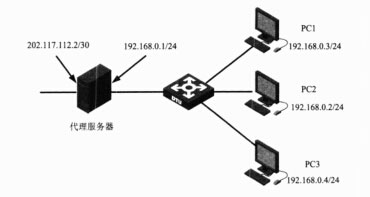
某单位局域网配置如下图所示,PC2发送到Internet上的报文的源IP地址为(26)。
综合知识
27/75
在IPv4向IPv6的过渡期间,如果要使得两个IPv6结点可以通过现有的IPv4网络进行通信,则应该使用(27);如果要使得纯IPv6结点可以与纯IPv4结点进行通信,则需要使用(28)。
综合知识
28/75
在IPv4向IPv6的过渡期间,如果要使得两个IPv6结点可以通过现有的IPv4网络进行通信,则应该使用(27);如果要使得纯IPv6结点可以与纯IPv4结点进行通信,则需要使用(28)。
综合知识
29/75
POP3协议采用(29)模式进行通信,当客户机需要服务时,客户端软件与POP3服务器建立(30)连接。
综合知识
30/75
POP3协议采用(29)模式进行通信,当客户机需要服务时,客户端软件与POP3服务器建立(30)连接。
综合知识
31/75
采用插入排序算法对n个整数排序,其基本思想是:在插入第i个整数时,前i-1个整数已经排好序,将第i个整数依次和第i-1,i-2,…个整数进行比较,找到应该插入的位置。现采用插入排序算法对6个整数{5,2,4,6,1,3}进行从小到大排序,则需要进行(31)次整数之间的比较。对于该排序算法,输入数据具有(32)特点时,对整数进行从小到大排序,所需的比较次数最多。
综合知识
32/75
采用插入排序算法对n个整数排序,其基本思想是:在插入第i个整数时,前i-1个整数已经排好序,将第i个整数依次和第i-1,i-2,…个整数进行比较,找到应该插入的位置。现采用插入排序算法对6个整数{5,2,4,6,1,3}进行从小到大排序,则需要进行(31)次整数之间的比较。对于该排序算法,输入数据具有(32)特点时,对整数进行从小到大排序,所需的比较次数最多。
综合知识
33/75
软件工程的基本目标是(33)。
综合知识
34/75
(34)过程模型明确地考虑了开发中的风险。
综合知识
35/75
在开发一个字处理软件时,首先快速发布了一个提供基本文件管理、编缉和文档生成功能的版本,接着发布提供更完善的编辑和文档生成功能的版本,最后发布提供拼写和语法检查功能的版本,这里采用了(35)过程模型。
综合知识
36/75
在各种不同的软件需求中,(36)描述了用户使用产品必须要完成的任务,可以用UML建模语言的(37)表示。
综合知识
37/75
在各种不同的软件需求中,(36)描述了用户使用产品必须要完成的任务,可以用UML建模语言的(37)表示。
综合知识
38/75
在结构化分析方法中,数据流图描述数据在系统中如何被传送或变换,反映系统必须完成的逻辑功能,用于(38)建模。在绘制数据流图时,(39)。
综合知识
39/75
在结构化分析方法中,数据流图描述数据在系统中如何被传送或变换,反映系统必须完成的逻辑功能,用于(38)建模。在绘制数据流图时,(39)。
综合知识
40/75
确定采用哪种软件体系结构是在(40)阶段进行的。
综合知识
41/75
以下关于模块化的叙述中,正确的是(41)。
综合知识
42/75
当一个模块直接使用另一个模块的内部数据,或者通过非正常入口转入另一个模块内部,这种模块之间的耦合为(42)。
综合知识
43/75
在面向对象技术中,(43)是一组具有相同结构、相同服务、共同关系和共同语义的(44)集合,其定义包括名称、属性和操作。
综合知识
44/75
在面向对象技术中,(43)是一组具有相同结构、相同服务、共同关系和共同语义的(44)集合,其定义包括名称、属性和操作。
综合知识
45/75
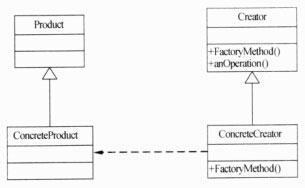
下图中,类 Product 和 ConcreteProduct 的关系是(45),类 ConcreteCreator 和 ConcreteProduct 的关系是(46)。
综合知识
46/75
下图中,类 Product 和 ConcreteProduct 的关系是(45),类 ConcreteCreator 和 ConcreteProduct 的关系是(46)。
综合知识
47/75
以下关于建立良好的程序设计风格的叙述中,正确的是(47)。
综合知识
48/75
由于硬件配置的变化,如机型、终端或打印机等导致软件系统需要进行修改维护,这类维护属于(48)。
综合知识
49/75
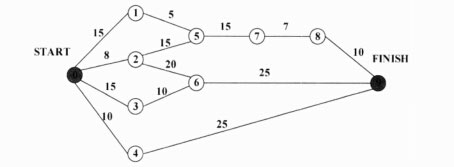
下图是一个软件项目的活动图,其中顶点表示项目里程碑,连接顶点的边表示包含的活动,则里程碑(49)没有按时完成会影响整个项目的进度。若活动0→2完成后,停止3天才开始活动2→6,则完成整个项目的最少时间是(50)天。
综合知识
50/75
下图是一个软件项目的活动图,其中顶点表示项目里程碑,连接顶点的边表示包含的活动,则里程碑(49)没有按时完成会影响整个项目的进度。若活动0→2完成后,停止3天才开始活动2→6,则完成整个项目的最少时间是(50)天。
综合知识
51/75
某软件系统无需在线容错,也不能采用冗余设计,如果对可靠性要求较高,故障有可能导致严重后果,一般采用(51)。
综合知识
52/75
软件可靠性管理把软件可靠性活动贯穿于软件开发的全过程,成为软件工程管理的一部分。确定软件可靠性度量活动属于(52)阶段。
综合知识
53/75
软件测试的对象不包括(53)。
综合知识
54/75
以下关于测试计划的叙述中,不正确的是(54)。
综合知识
55/75
以下关于软件测试原则的叙述中,正确的是(55)。
综合知识
56/75
以下关于测试时机的叙述中,不正确的是(56)。
综合知识
57/75
以下不属于软件测试工具的是(57) 。
综合知识
58/75
软件的易用性包括(58)。
①易理解性 ②易学习性 ③易操作性 ④吸引性 ⑤依从性
①易理解性 ②易学习性 ③易操作性 ④吸引性 ⑤依从性
综合知识
59/75
黑盒测试不能发现(59)。
综合知识
60/75
以下关于边界值测试法的叙述中,不正确的是(60)。
综合知识
61/75
白盒测试不能发现(61)。
综合知识
62/75
对于逻辑表达式((a&&b)||c),需要(62)个测试用例才能完成条件组合覆盖。
综合知识
63/75
为检测系统在长时间运行下是否存在性能瓶颈,应进行(63)。
综合知识
64/75
以下关于负载压力测试的叙述中,不正确的是(64)。
综合知识
65/75
测试过程中,正确的测试顺序应该是(65)。
①单元测试 ②集成测试 ③系统测试
①单元测试 ②集成测试 ③系统测试
综合知识
66/75
以下属于静态测试方法的是(66)。
综合知识
67/75
以下关于集成测试的叙述中,不正确的是(67)。
综合知识
68/75
对一段信息生成消息摘要是防止信息在网络传输及存储过程中被篡改的基本手段,(68)不属于生成消息摘要的基本算法。
综合知识
69/75
软件系统的安全性是信息安全的一个重要组成部分,针对程序和数据的安全性测试与评估是软件安全性测试的重要内容,(69)不属于安全件测试与评估的基本内容。
综合知识
70/75
模拟攻击试验是一种基本的软件安全性测试方法,以下关于模拟攻击试验的叙述中,正确的是(70)。
综合知识
71/75
There is nothing in this world constant but inconstancy. —SWIFT
Project after project designs a set of algorithms and then plunges into cor struction of customer-deliverable software on a schedule that demands delivery of the first thing built.
In most projects, the first system built is (71) usable. It may be too slow, too big, awkward to use, or all three. There is no (72) but to start again, smarting but smarter, and build a redesigned version in which these problems are solved. The discard and (73) may be done in one lump, or it may be done piece-by-piece. But all large-system experience shows that it will be done. Where a new system concept or new technology is used, one has to build a system to throw away, for even the best planning is not so omniscient (全知的)as to get it right the first time.
The management question, therefore, is not whether to build a pilot system and throw it away. You will do that. The only question is whether to plan in advance to build a (74) , or to promise to deliver the throwaway to customers. Seen this way, the answer is much clearer. Delivering that throwaway to customers buys time, but it does so only at the (75) of agony (极大痛苦)for the user, distraction for the builders while they do the redesign, and a bad reputation for the product that the best redesign will find hard to live down.
Hence plan to throw one away; you will, anyhow.
Project after project designs a set of algorithms and then plunges into cor struction of customer-deliverable software on a schedule that demands delivery of the first thing built.
In most projects, the first system built is (71) usable. It may be too slow, too big, awkward to use, or all three. There is no (72) but to start again, smarting but smarter, and build a redesigned version in which these problems are solved. The discard and (73) may be done in one lump, or it may be done piece-by-piece. But all large-system experience shows that it will be done. Where a new system concept or new technology is used, one has to build a system to throw away, for even the best planning is not so omniscient (全知的)as to get it right the first time.
The management question, therefore, is not whether to build a pilot system and throw it away. You will do that. The only question is whether to plan in advance to build a (74) , or to promise to deliver the throwaway to customers. Seen this way, the answer is much clearer. Delivering that throwaway to customers buys time, but it does so only at the (75) of agony (极大痛苦)for the user, distraction for the builders while they do the redesign, and a bad reputation for the product that the best redesign will find hard to live down.
Hence plan to throw one away; you will, anyhow.
综合知识
72/75
There is nothing in this world constant but inconstancy. —SWIFT
Project after project designs a set of algorithms and then plunges into cor struction of customer-deliverable software on a schedule that demands delivery of the first thing built.
In most projects, the first system built is (71) usable. It may be too slow, too big, awkward to use, or all three. There is no (72) but to start again, smarting but smarter, and build a redesigned version in which these problems are solved. The discard and (73) may be done in one lump, or it may be done piece-by-piece. But all large-system experience shows that it will be done. Where a new system concept or new technology is used, one has to build a system to throw away, for even the best planning is not so omniscient (全知的)as to get it right the first time.
The management question, therefore, is not whether to build a pilot system and throw it away. You will do that. The only question is whether to plan in advance to build a (74) , or to promise to deliver the throwaway to customers. Seen this way, the answer is much clearer. Delivering that throwaway to customers buys time, but it does so only at the (75) of agony (极大痛苦)for the user, distraction for the builders while they do the redesign, and a bad reputation for the product that the best redesign will find hard to live down.
Hence plan to throw one away; you will, anyhow.
Project after project designs a set of algorithms and then plunges into cor struction of customer-deliverable software on a schedule that demands delivery of the first thing built.
In most projects, the first system built is (71) usable. It may be too slow, too big, awkward to use, or all three. There is no (72) but to start again, smarting but smarter, and build a redesigned version in which these problems are solved. The discard and (73) may be done in one lump, or it may be done piece-by-piece. But all large-system experience shows that it will be done. Where a new system concept or new technology is used, one has to build a system to throw away, for even the best planning is not so omniscient (全知的)as to get it right the first time.
The management question, therefore, is not whether to build a pilot system and throw it away. You will do that. The only question is whether to plan in advance to build a (74) , or to promise to deliver the throwaway to customers. Seen this way, the answer is much clearer. Delivering that throwaway to customers buys time, but it does so only at the (75) of agony (极大痛苦)for the user, distraction for the builders while they do the redesign, and a bad reputation for the product that the best redesign will find hard to live down.
Hence plan to throw one away; you will, anyhow.
综合知识
73/75
There is nothing in this world constant but inconstancy. —SWIFT
Project after project designs a set of algorithms and then plunges into cor struction of customer-deliverable software on a schedule that demands delivery of the first thing built.
In most projects, the first system built is (71) usable. It may be too slow, too big, awkward to use, or all three. There is no (72) but to start again, smarting but smarter, and build a redesigned version in which these problems are solved. The discard and (73) may be done in one lump, or it may be done piece-by-piece. But all large-system experience shows that it will be done. Where a new system concept or new technology is used, one has to build a system to throw away, for even the best planning is not so omniscient (全知的)as to get it right the first time.
The management question, therefore, is not whether to build a pilot system and throw it away. You will do that. The only question is whether to plan in advance to build a (74) , or to promise to deliver the throwaway to customers. Seen this way, the answer is much clearer. Delivering that throwaway to customers buys time, but it does so only at the (75) of agony (极大痛苦)for the user, distraction for the builders while they do the redesign, and a bad reputation for the product that the best redesign will find hard to live down.
Hence plan to throw one away; you will, anyhow.
Project after project designs a set of algorithms and then plunges into cor struction of customer-deliverable software on a schedule that demands delivery of the first thing built.
In most projects, the first system built is (71) usable. It may be too slow, too big, awkward to use, or all three. There is no (72) but to start again, smarting but smarter, and build a redesigned version in which these problems are solved. The discard and (73) may be done in one lump, or it may be done piece-by-piece. But all large-system experience shows that it will be done. Where a new system concept or new technology is used, one has to build a system to throw away, for even the best planning is not so omniscient (全知的)as to get it right the first time.
The management question, therefore, is not whether to build a pilot system and throw it away. You will do that. The only question is whether to plan in advance to build a (74) , or to promise to deliver the throwaway to customers. Seen this way, the answer is much clearer. Delivering that throwaway to customers buys time, but it does so only at the (75) of agony (极大痛苦)for the user, distraction for the builders while they do the redesign, and a bad reputation for the product that the best redesign will find hard to live down.
Hence plan to throw one away; you will, anyhow.
综合知识
74/75
There is nothing in this world constant but inconstancy. —SWIFT
Project after project designs a set of algorithms and then plunges into cor struction of customer-deliverable software on a schedule that demands delivery of the first thing built.
In most projects, the first system built is (71) usable. It may be too slow, too big, awkward to use, or all three. There is no (72) but to start again, smarting but smarter, and build a redesigned version in which these problems are solved. The discard and (73) may be done in one lump, or it may be done piece-by-piece. But all large-system experience shows that it will be done. Where a new system concept or new technology is used, one has to build a system to throw away, for even the best planning is not so omniscient (全知的)as to get it right the first time.
The management question, therefore, is not whether to build a pilot system and throw it away. You will do that. The only question is whether to plan in advance to build a (74) , or to promise to deliver the throwaway to customers. Seen this way, the answer is much clearer. Delivering that throwaway to customers buys time, but it does so only at the (75) of agony (极大痛苦)for the user, distraction for the builders while they do the redesign, and a bad reputation for the product that the best redesign will find hard to live down.
Hence plan to throw one away; you will, anyhow.
Project after project designs a set of algorithms and then plunges into cor struction of customer-deliverable software on a schedule that demands delivery of the first thing built.
In most projects, the first system built is (71) usable. It may be too slow, too big, awkward to use, or all three. There is no (72) but to start again, smarting but smarter, and build a redesigned version in which these problems are solved. The discard and (73) may be done in one lump, or it may be done piece-by-piece. But all large-system experience shows that it will be done. Where a new system concept or new technology is used, one has to build a system to throw away, for even the best planning is not so omniscient (全知的)as to get it right the first time.
The management question, therefore, is not whether to build a pilot system and throw it away. You will do that. The only question is whether to plan in advance to build a (74) , or to promise to deliver the throwaway to customers. Seen this way, the answer is much clearer. Delivering that throwaway to customers buys time, but it does so only at the (75) of agony (极大痛苦)for the user, distraction for the builders while they do the redesign, and a bad reputation for the product that the best redesign will find hard to live down.
Hence plan to throw one away; you will, anyhow.
综合知识
75/75
There is nothing in this world constant but inconstancy. —SWIFT
Project after project designs a set of algorithms and then plunges into cor struction of customer-deliverable software on a schedule that demands delivery of the first thing built.
In most projects, the first system built is (71) usable. It may be too slow, too big, awkward to use, or all three. There is no (72) but to start again, smarting but smarter, and build a redesigned version in which these problems are solved. The discard and (73) may be done in one lump, or it may be done piece-by-piece. But all large-system experience shows that it will be done. Where a new system concept or new technology is used, one has to build a system to throw away, for even the best planning is not so omniscient (全知的)as to get it right the first time.
The management question, therefore, is not whether to build a pilot system and throw it away. You will do that. The only question is whether to plan in advance to build a (74) , or to promise to deliver the throwaway to customers. Seen this way, the answer is much clearer. Delivering that throwaway to customers buys time, but it does so only at the (75) of agony (极大痛苦)for the user, distraction for the builders while they do the redesign, and a bad reputation for the product that the best redesign will find hard to live down.
Hence plan to throw one away; you will, anyhow.
Project after project designs a set of algorithms and then plunges into cor struction of customer-deliverable software on a schedule that demands delivery of the first thing built.
In most projects, the first system built is (71) usable. It may be too slow, too big, awkward to use, or all three. There is no (72) but to start again, smarting but smarter, and build a redesigned version in which these problems are solved. The discard and (73) may be done in one lump, or it may be done piece-by-piece. But all large-system experience shows that it will be done. Where a new system concept or new technology is used, one has to build a system to throw away, for even the best planning is not so omniscient (全知的)as to get it right the first time.
The management question, therefore, is not whether to build a pilot system and throw it away. You will do that. The only question is whether to plan in advance to build a (74) , or to promise to deliver the throwaway to customers. Seen this way, the answer is much clearer. Delivering that throwaway to customers buys time, but it does so only at the (75) of agony (极大痛苦)for the user, distraction for the builders while they do the redesign, and a bad reputation for the product that the best redesign will find hard to live down.
Hence plan to throw one away; you will, anyhow.