综合知识
1/75
VLIW是(1)的简称。
综合知识
2/75
主存与Cache的地址映射方式中,(2)方式可以实现主存任意一块装入Cache中任意位置,只有装满才需要替换。
综合知识
3/75
如果《2x》的补码是《90H》,那么x的真值是(3)。
综合知识
4/75
移位指令中的(4)指令的操作结果相当于对操作数进行乘2操作。
综合知识
5/75
内存按字节编址,从A1000H到B13FFH的区域的存储容量为(5)KB。
综合知识
6/75
以下关于总线的叙述中,不正确的是(6)。
综合知识
7/75
以下关于网络层次与主要设备对应关系的叙述中,配对正确的是(7)。
综合知识
8/75
传输经过SSL加密的网页所采用的协议是(8)。
综合知识
9/75
为了攻击远程主机,通常利用(9)技术检测远程主机状态。
综合知识
10/75
某软件公司参与开发管理系统软件的程序员张某,辞职到另一公司任职,于是该项目负责人将该管理系统软件上开发者的署名更改为李某(接张某工作)。该项目负责人的行为(10)。
综合知识
11/75
美国某公司与中国某企业谈技术合作,合同约定使用l项美国专利(获得批准并在有效期内),该项技术未在中国和其他国家申请专利。依照该专利生产的产品(11)需要向美国公司支付这件美国专利的许可使用费。
综合知识
12/75
以下媒体文件格式中,(12)是视频文件格式。
综合知识
13/75
以下软件产品中,属于图像编辑处理工具的软件是(13)。
综合知识
14/75
使用150DPI的扫描分辨率扫描一幅3×4英寸的彩色照片,得到原始的24位真彩色图像的数据量是(14)Byte。
综合知识
15/75
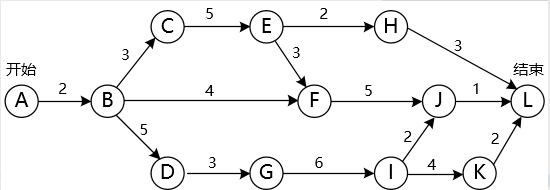
某软件项目的活动图如下图所示,其中顶点表示项目里程碑,连接顶点的边表示包含的活动,边上的数字表示活动的持续时间(天),则完成该项目的最少时间为(15)天。活动BD最多可以晚开始(16)天而不会影响整个项目的进度。
综合知识
16/75
某软件项目的活动图如下图所示,其中顶点表示项目里程碑,连接顶点的边表示包含的活动,边上的数字表示活动的持续时间(天),则完成该项目的最少时间为(15)天。活动BD最多可以晚开始(16)天而不会影响整个项目的进度。

综合知识
17/75
在结构化分析中,用数据流图描述(17)。当采用数据流图对一个图书馆管理系统进行分析时,(18)是一个外部实体。
综合知识
18/75
在结构化分析中,用数据流图描述(17)。当采用数据流图对一个图书馆管理系统进行分析时,(18)是一个外部实体。
综合知识
19/75
软件开发过程中,需求分析阶段的输出不包括(19)。
综合知识
20/75
以下关于高级程序设计语言实现的编译和解释方式的叙述中,正确的是(20)。
综合知识
21/75
以下关于脚本语言的叙述中,正确的是(21)。
综合知识
22/75
将高级语言源程序先转化为一种中间代码是现代编译器的常见处理方式。常用的中间代码有后缀式、(22)、语法树等。
综合知识
23/75
当用户通过键盘或鼠标进入某应用系统时,通常最先获得键盘或鼠标输入信息的是(23)程序。
综合知识
24/75
在Windows操作系统中,当用户双击《IMG_20160122_103.jpg》文件名时,系统会自动通过建立的(24)来决定使用什么程序打开该图像文件。
综合知识
25/75
某磁盘有100个磁道,磁头从一个磁道移至另一个磁道需要6ms。文件在磁盘上非连续存放,逻辑上相邻数据块的平均距离为10个磁道,每块的旋转延迟时间及传输时间分别为100ms和20ms,则读取一个100块的文件需要(25)ms。
综合知识
26/75
进程P1、P2、P3、P4和P5的前趋图如下图所示:
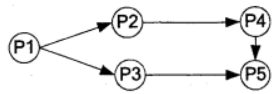
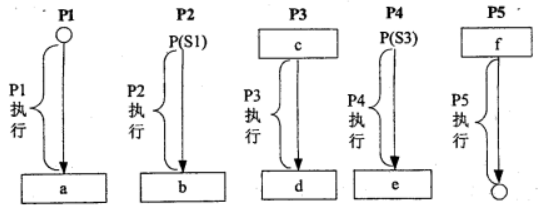
若用PV操作控制进程P1、P2、P3、P4和P5并发执行的过程,则需要设置5个信号S1、S2、S3、S4和S5,且信号量S1~S5的初值都等于零。下图中a和b处应分别填(26);c和d处应分别填写(27);e和f处应分别填写(28)。
综合知识
27/75
进程P1、P2、P3、P4和P5的前趋图如下图所示:

若用PV操作控制进程P1、P2、P3、P4和P5并发执行的过程,则需要设置5个信号S1、S2、S3、S4和S5,且信号量S1~S5的初值都等于零。下图中a和b处应分别填(26);c和d处应分别填写(27);e和f处应分别填写(28)。
综合知识
28/75
进程P1、P2、P3、P4和P5的前趋图如下图所示:

若用PV操作控制进程P1、P2、P3、P4和P5并发执行的过程,则需要设置5个信号S1、S2、S3、S4和S5,且信号量S1~S5的初值都等于零。下图中a和b处应分别填(26);c和d处应分别填写(27);e和f处应分别填写(28)。
综合知识
29/75
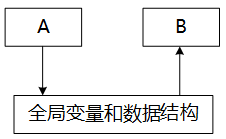
如下图所示,模块A和模块B都访问相同的全局变量和数据结构,则这两个模块之间的耦合类型为(29)耦合。
综合知识
30/75
以下关于增量开发模型的叙述中,不正确的是(30)。
综合知识
31/75
在设计软件的模块结构时,(31)不能改进设计质量。
综合知识
32/75
软件体系结构的各种风格中,仓库风格包含一个数据仓库和若干个其他构件。数据仓库位于该体系结构的中心,其他构件访问该数据仓库并对其中的数据进行增、删、改等操作。以下关于该风格的叙述中,不正确的是(32)。(33)不属于仓库风格。
综合知识
33/75
软件体系结构的各种风格中,仓库风格包含一个数据仓库和若干个其他构件。数据仓库位于该体系结构的中心,其他构件访问该数据仓库并对其中的数据进行增、删、改等操作。以下关于该风格的叙述中,不正确的是(32)。(33)不属于仓库风格。
综合知识
34/75
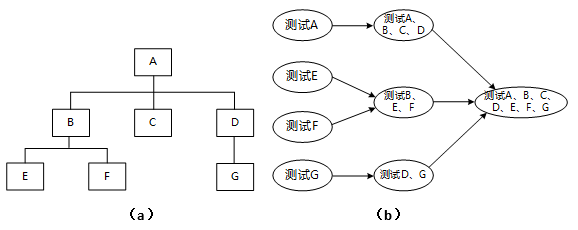
下图(a)所示为一个模块层次结构的例子,图(b)所示为对其进行集成测试的顺序,则此测试采用了(34)测试策略。该测试策略的优点不包括(35)。
综合知识
35/75
下图(a)所示为一个模块层次结构的例子,图(b)所示为对其进行集成测试的顺序,则此测试采用了(34)测试策略。该测试策略的优点不包括(35)。
综合知识
36/75
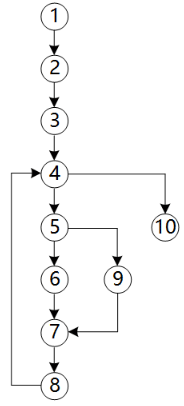
采用McCabe度量法计算下图所示程序的环路复杂性为(36)。
综合知识
37/75
在面向对象方法中,(37)是父类和子类之间共享数据和方法的机制。子类在原有父类接口的基础上,用适合于自己要求的实现去置换父类中的相应实现称为(38)。
综合知识
38/75
在面向对象方法中,(37)是父类和子类之间共享数据和方法的机制。子类在原有父类接口的基础上,用适合于自己要求的实现去置换父类中的相应实现称为(38)。
综合知识
39/75
在UML用例图中,参与者表示(39)。
综合知识
40/75
UML中关联是一个结构关系,描述了一组链。两个类之间(40)关联。
综合知识
41/75
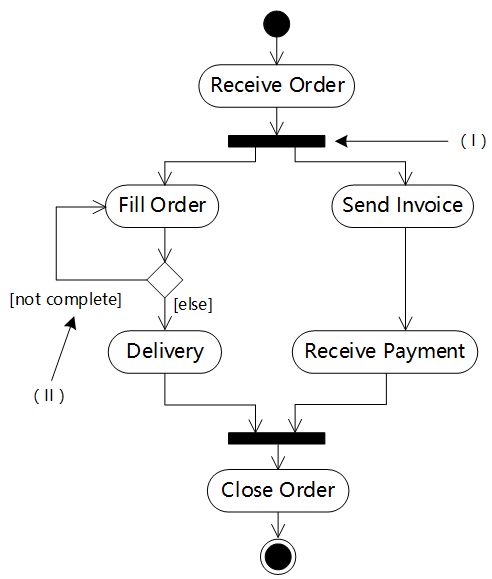
如下所示的UML图是(41),图中(Ⅰ)表示(42),(Ⅱ)表示(43)。
综合知识
42/75
如下所示的UML图是(41),图中(Ⅰ)表示(42),(Ⅱ)表示(43)。
综合知识
43/75
如下所示的UML图是(41),图中(Ⅰ)表示(42),(Ⅱ)表示(43)。
综合知识
44/75
为图形用户界面(GUI)组件定义不同平台的并行类层次结构,适合采用(44)模式。
综合知识
45/75
(45)设计模式将一个请求封装为一个对象,从而使得可以用不同的请求对客户进行参数化,对请求排队或记录请求日志,以及支持可撤销的操作。
综合知识
46/75
(46)设计模式最适合用于发布/订阅消息模型,即当订阅者注册一个主题后,此主题有新消息到来时订阅者就会收到通知。
综合知识
47/75
因使用大量的对象而造成很大的存储开销时,适合采用(47)模式进行对象共享,以减少对象数量从而达到较少的内存占用并提升性能。
综合知识
48/75
移进—归约分析法是编译程序(或解释程序)对高级语言源程序进行语法分析的一种方法,属于(48)的语法分析方法。
综合知识
49/75
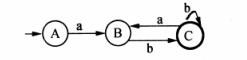
某确定的有限自动机(DFA)的状态转换图如下图所示(A是初态,C是终态),则该DFA能识别(49)。
综合知识
50/75
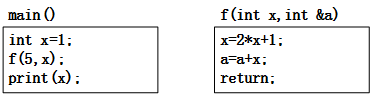
函数main()、f()的定义如下所示,调用函数f()时,第一个参数采用传值(call by value)方式,第二个参数采用传引用(call by reference)方式,main函数中《print(x)》执行后输出的值为(50)。
综合知识
51/75
数据的物理独立性和逻辑独立性分别是通过修改(51)来完成的。
综合知识
52/75
关系规范化在数据库设计的(52)阶段进行。
综合知识
53/75
若给定的关系模式为R,U={A,B,C},F={AB→C,C→B},则关系R(53)。
综合知识
54/75
某公司数据库中的元件关系模式为P(元件号,元件名称,供应商,供应商所在地,库存量),函数依赖集F如下所示:
F={元件号→元件名称,(元件号,供应商)→库存量,供应商→供应商所在地}
元件关系的主键为(54),该关系存在冗余以及插入异常和删除异常等问题。为了解决这一问题需要将元件关系分解(55),分解后的关系模式可以达到(56)。
综合知识
55/75
某公司数据库中的元件关系模式为P(元件号,元件名称,供应商,供应商所在地,库存量),函数依赖集F如下所示:
F={元件号→元件名称,(元件号,供应商)→库存量,供应商→供应商所在地}
元件关系的主键为(54),该关系存在冗余以及插入异常和删除异常等问题。为了解决这一问题需要将元件关系分解(55),分解后的关系模式可以达到(56)。
综合知识
56/75
某公司数据库中的元件关系模式为P(元件号,元件名称,供应商,供应商所在地,库存量),函数依赖集F如下所示:
F={元件号→元件名称,(元件号,供应商)→库存量,供应商→供应商所在地}
元件关系的主键为(54),该关系存在冗余以及插入异常和删除异常等问题。为了解决这一问题需要将元件关系分解(55),分解后的关系模式可以达到(56)。
综合知识
57/75
若元素以a,b,c,d,e的顺序进入一个初始为空的栈中,每个元素进栈、出栈各1次,要求出栈的第一个元素为d,则合法的出栈序列共有(57)种。
综合知识
58/75
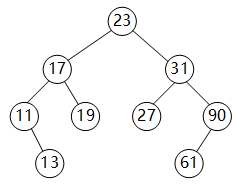
设有二叉排序树(或二叉查找树)如下图所示,建立该二叉树的关键码序列不可能是(58)。
综合知识
59/75
若一棵二叉树的高度(即层数)为h,则该二叉树(59)。
综合知识
60/75
在13个元素构成的有序表A[1..13]中进行折半查找(或称为二分查找,向下取整)。那么以下叙述中,错误的是(60)。
综合知识
61/75
以下关于图的遍历的叙述中,正确的是(61)。
综合知识
62/75
考虑一个背包问题,共有n=5个物品,背包容量为W=10,物品的重量和价值分别为:w={2,2,6,5,4},v={6,3,5,4,6},求背包问题的最大装包价值。若此为0-1背包问题,分析该问题具有最优子结构,定义递归式为

其中c(i,j)表示i个物品、容量为j的0-1背包问题的最大装包价值,最终要求解c(n,W)。
采用自底向上的动态规划方法求解,得到最大装包价值为(62),算法的时间复杂度为(63)。
若此为部分背包问题,首先采用归并排序算法,根据物品的单位重量价值从大到小排序,然后依次将物品放入背包直至所有物品放入背包中或者背包再无容量,则得到的最大装包价值为(64),算法的时间复杂度为(65)。
综合知识
63/75
考虑一个背包问题,共有n=5个物品,背包容量为W=10,物品的重量和价值分别为:w={2,2,6,5,4},v={6,3,5,4,6},求背包问题的最大装包价值。若此为0-1背包问题,分析该问题具有最优子结构,定义递归式为

其中c(i,j)表示i个物品、容量为j的0-1背包问题的最大装包价值,最终要求解c(n,W)。
采用自底向上的动态规划方法求解,得到最大装包价值为(62),算法的时间复杂度为(63)。
若此为部分背包问题,首先采用归并排序算法,根据物品的单位重量价值从大到小排序,然后依次将物品放入背包直至所有物品放入背包中或者背包再无容量,则得到的最大装包价值为(64),算法的时间复杂度为(65)。
综合知识
64/75
考虑一个背包问题,共有n=5个物品,背包容量为W=10,物品的重量和价值分别为:w={2,2,6,5,4},v={6,3,5,4,6},求背包问题的最大装包价值。若此为0-1背包问题,分析该问题具有最优子结构,定义递归式为

其中c(i,j)表示i个物品、容量为j的0-1背包问题的最大装包价值,最终要求解c(n,W)。
采用自底向上的动态规划方法求解,得到最大装包价值为(62),算法的时间复杂度为(63)。
若此为部分背包问题,首先采用归并排序算法,根据物品的单位重量价值从大到小排序,然后依次将物品放入背包直至所有物品放入背包中或者背包再无容量,则得到的最大装包价值为(64),算法的时间复杂度为(65)。
综合知识
65/75
考虑一个背包问题,共有n=5个物品,背包容量为W=10,物品的重量和价值分别为:w={2,2,6,5,4},v={6,3,5,4,6},求背包问题的最大装包价值。若此为0-1背包问题,分析该问题具有最优子结构,定义递归式为

其中c(i,j)表示i个物品、容量为j的0-1背包问题的最大装包价值,最终要求解c(n,W)。
采用自底向上的动态规划方法求解,得到最大装包价值为(62),算法的时间复杂度为(63)。
若此为部分背包问题,首先采用归并排序算法,根据物品的单位重量价值从大到小排序,然后依次将物品放入背包直至所有物品放入背包中或者背包再无容量,则得到的最大装包价值为(64),算法的时间复杂度为(65)。
综合知识
66/75
默认情况下,FTP服务器的控制端口为(66),上传文件时的端口为(67)。
综合知识
67/75
默认情况下,FTP服务器的控制端口为(66),上传文件时的端口为(67)。
综合知识
68/75
使用ping命令可以进行网络检测,在进行一系列检测时,按照由近及远原则,首先执行的是(68)。
综合知识
69/75
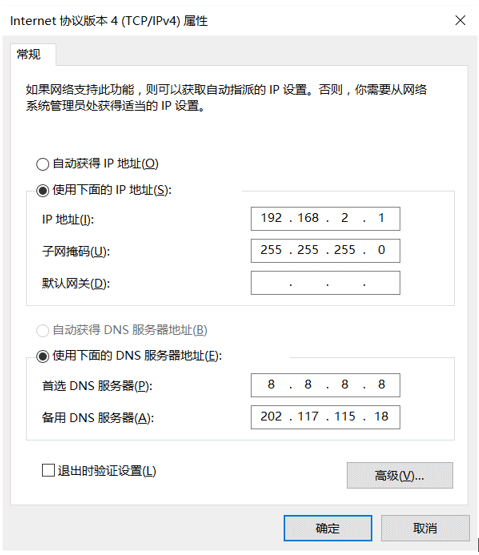
某PC的Internet协议属性参数如下图所示,默认网关的IP地址是(69)。
综合知识
70/75
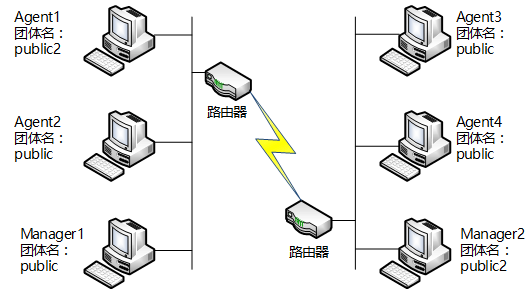
在下图的SNMP配置中,能够响应Manager2的getRequest请求的是(70)。
综合知识
71/75
In the fields of physical security and information security, access control is the selective restriction of access to a place or other resource. The act of accessing may mean consuming, entering, or using. Permission to access a resource is called authorization (授权).
An access control mechanism (71) between a user (or a process executing on behalf of a user) and system resources, such as applications, operating systems, firewalls, routers, files, and databases. The system must first authenticate(验证)a user seeking access. Typically the authentication function determines whether the user is (72) to access the system at all. Then the access control function determines if the specific requested access by this user is permitted. A security administrator maintains an authorization database that specifies what type of access to which resources is allowed for this user. The access control function consults this database to determine whether to(73)access. An auditing function monitors and keeps a record of user accesses to system resources.
In practice, a number of(74)may cooperatively share the access control function. All operating systems have at least a rudimentary(基本的), and in many cases a quite robust, access control component. Add-on security packages can add to the(75)access control capabilities of the OS. Particular applications or utilities, such as a database management system, also incorporate access control functions. External devices, such as firewalls, can also provide access control services.
综合知识
72/75
In the fields of physical security and information security, access control is the selective restriction of access to a place or other resource. The act of accessing may mean consuming, entering, or using. Permission to access a resource is called authorization (授权).
An access control mechanism (71) between a user (or a process executing on behalf of a user) and system resources, such as applications, operating systems, firewalls, routers, files, and databases. The system must first authenticate(验证)a user seeking access. Typically the authentication function determines whether the user is (72) to access the system at all. Then the access control function determines if the specific requested access by this user is permitted. A security administrator maintains an authorization database that specifies what type of access to which resources is allowed for this user. The access control function consults this database to determine whether to(73)access. An auditing function monitors and keeps a record of user accesses to system resources.
In practice, a number of(74)may cooperatively share the access control function. All operating systems have at least a rudimentary(基本的), and in many cases a quite robust, access control component. Add-on security packages can add to the(75)access control capabilities of the OS. Particular applications or utilities, such as a database management system, also incorporate access control functions. External devices, such as firewalls, can also provide access control services.
综合知识
73/75
In the fields of physical security and information security, access control is the selective restriction of access to a place or other resource. The act of accessing may mean consuming, entering, or using. Permission to access a resource is called authorization (授权).
An access control mechanism (71) between a user (or a process executing on behalf of a user) and system resources, such as applications, operating systems, firewalls, routers, files, and databases. The system must first authenticate(验证)a user seeking access. Typically the authentication function determines whether the user is (72) to access the system at all. Then the access control function determines if the specific requested access by this user is permitted. A security administrator maintains an authorization database that specifies what type of access to which resources is allowed for this user. The access control function consults this database to determine whether to(73)access. An auditing function monitors and keeps a record of user accesses to system resources.
In practice, a number of(74)may cooperatively share the access control function. All operating systems have at least a rudimentary(基本的), and in many cases a quite robust, access control component. Add-on security packages can add to the(75)access control capabilities of the OS. Particular applications or utilities, such as a database management system, also incorporate access control functions. External devices, such as firewalls, can also provide access control services.
综合知识
74/75
In the fields of physical security and information security, access control is the selective restriction of access to a place or other resource. The act of accessing may mean consuming, entering, or using. Permission to access a resource is called authorization (授权).
An access control mechanism (71) between a user (or a process executing on behalf of a user) and system resources, such as applications, operating systems, firewalls, routers, files, and databases. The system must first authenticate(验证)a user seeking access. Typically the authentication function determines whether the user is (72) to access the system at all. Then the access control function determines if the specific requested access by this user is permitted. A security administrator maintains an authorization database that specifies what type of access to which resources is allowed for this user. The access control function consults this database to determine whether to(73)access. An auditing function monitors and keeps a record of user accesses to system resources.
In practice, a number of(74)may cooperatively share the access control function. All operating systems have at least a rudimentary(基本的), and in many cases a quite robust, access control component. Add-on security packages can add to the(75)access control capabilities of the OS. Particular applications or utilities, such as a database management system, also incorporate access control functions. External devices, such as firewalls, can also provide access control services.
综合知识
75/75
In the fields of physical security and information security, access control is the selective restriction of access to a place or other resource. The act of accessing may mean consuming, entering, or using. Permission to access a resource is called authorization (授权).
An access control mechanism (71) between a user (or a process executing on behalf of a user) and system resources, such as applications, operating systems, firewalls, routers, files, and databases. The system must first authenticate(验证)a user seeking access. Typically the authentication function determines whether the user is (72) to access the system at all. Then the access control function determines if the specific requested access by this user is permitted. A security administrator maintains an authorization database that specifies what type of access to which resources is allowed for this user. The access control function consults this database to determine whether to(73)access. An auditing function monitors and keeps a record of user accesses to system resources.
In practice, a number of(74)may cooperatively share the access control function. All operating systems have at least a rudimentary(基本的), and in many cases a quite robust, access control component. Add-on security packages can add to the(75)access control capabilities of the OS. Particular applications or utilities, such as a database management system, also incorporate access control functions. External devices, such as firewalls, can also provide access control services.